Imagine an organization that manages a complex infrastructure consisting of servers, critical network connections and physical assets that must operate without interruption.
At some point, a member of the management team makes the following question: “For the infrastructure control and management, do we need a NOC, a control room or both?”

The confusion is understandable, as both environments share a similar outward appearance: operators working 24/7 across different shifts, screens glowing at 3 a.m. and critical situations. However, this resemblance masks differences in responsibilities, objectives and technology; they are not merely different versions of the same concept, as they address entirely different problems. Therefore, it is important not to confuse them to avoid unsuitable designs, operators with wrong profiles or unmanageable situations.
Toda empresa especializada en entornos críticos antes de diseñar cualquier espacio de control sabe que debe entender con precisión qué supervisan los operadores y qué está en juego en la compañía si algo falla. Este artículo tiene como objetivo resolver la distinción entre ambos entornos para ayudar a entender y poder decidir qué modelo encaja mejor con la operación.
Any company specialized in critical environments knows that, before designing a controlling space, it must precisely understand what the operators are monitoring and what is at stake for the company should a failure happen. This article aims to clarify the difference between the two environments, helping to determine which model best suits the operation.
The NOC’s core mission: keeping the network operational
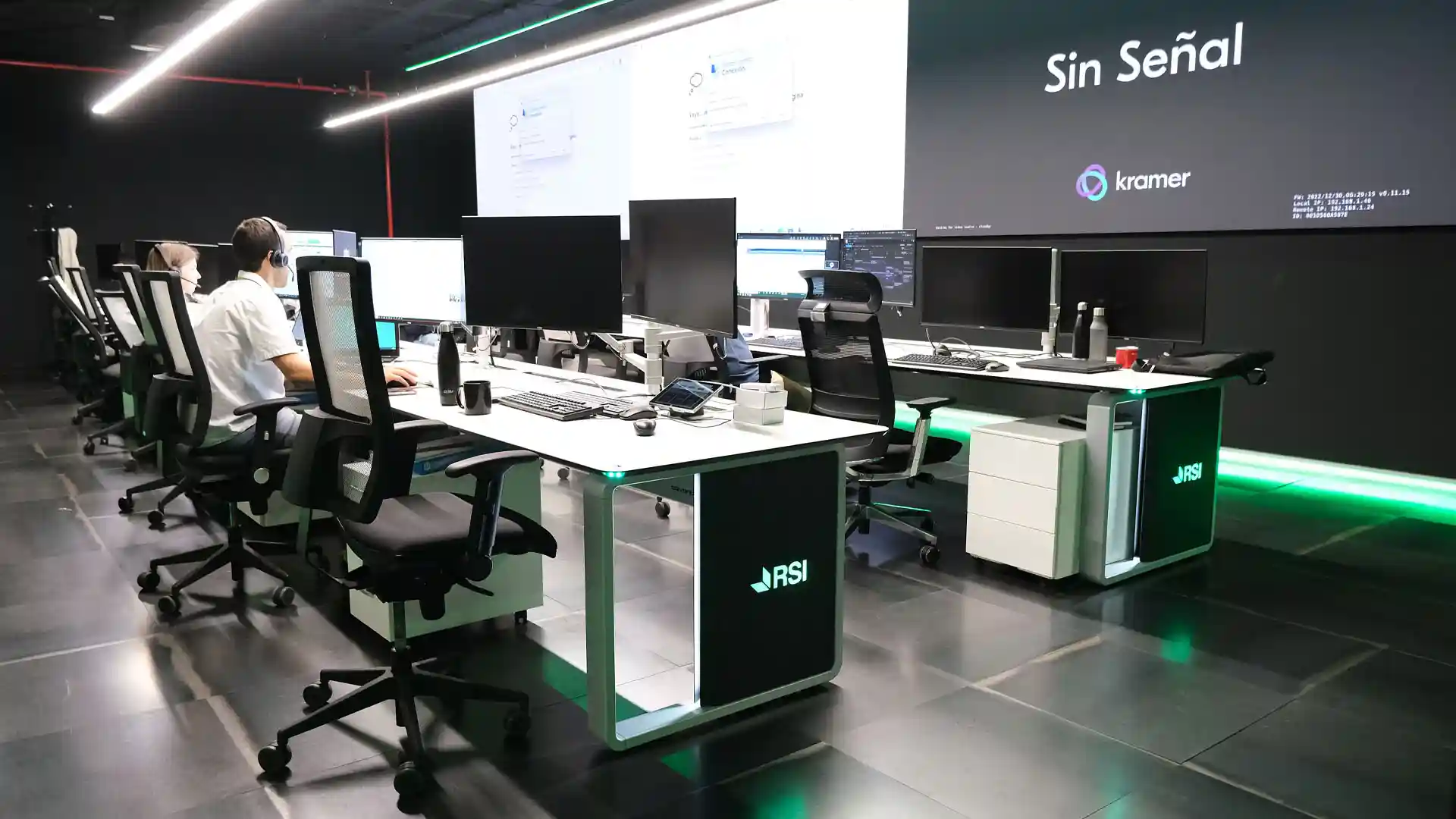
A Network Operations Center (NOC) is the facility from which a technical team monitors and manages 24/7 the organization’s network infrastructure and IT systems.
Its primary objective is to ensure service availability and continuity. In more mature environments, this objective shifts toward monitoring and incorporating certain business indicators, although the objective remains the technology layer.

Every incident in a NOC follows an established cycle: alert detection, ticket creation, investigation and resolution (or escalation to the appropriate team). This cycle does not end with service restoration, as the case must be documented, track the resolution and, where applicable, analyze the root cause to prevent any recurrence. Furthermore, the success of the organization of the NOC is measured by specific metrics ranging from system uptime and incident resolution to meeting commitments made to customers or senior management.
So, what does a NOC actually monitor?
A NOC’s monitoring inventory includes routers, network switches, servers, bandwidth, backups and firmware updates. If a link goes down or a server exceeds its CPU usage threshold, the NOC detects the issue and takes action according to established protocol.
After this explanation, it is also worth clarifying the relationship with a Security Operations Center (SOC), due to he first one covers availability and infrastructure and SOC addresses active threats such as malware, unauthorized access or impersonation attacks. Thus, these two critical environments are complementary yet not interchangeable, although in organizations lacking their own SOC, certain basic security tasks fall to the NOC.
The critical processes monitoring environment
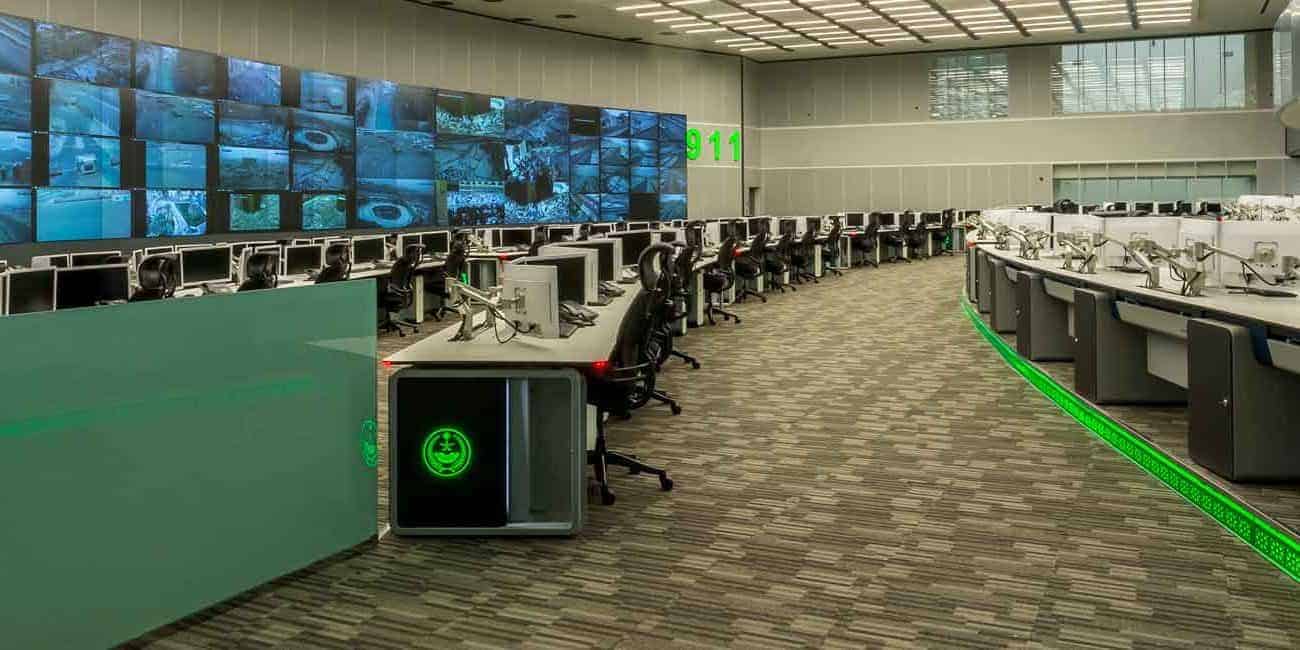
A control room is a centralized space designed to manage physical and operational processes in real time. Its core is not the network, it is the process.
Facilities such as power plants, road networks, 112 emergency centers and continuous manufacturing companies rely on one or more control rooms. Control room operators make decisions with immediate impact, not only by restoring digital services but also by directly intervening in variables that affect people, facilities or essential supplies. While a Network Operations Center (NOC) restores connectivity, the control room prevents the stop of a production line due to a lack of connectivity.

Por esto, todo sector del que un fallo físico conlleve consecuencias directas para personas, infraestructuras o servicios esenciales deberán contar con una sala de control, ya que ofrece al operador la capacidad de tener en un único espacio la imagen, el dato y el contexto necesarios para reaccionar con criterio ante cualquier incidente.
Therefore, any sector where a physical failure entails direct consequences for people, infrastructure or essential services must have a control room, as it provides the operator with the ability to access, in a single space, the image, data and context needed to respond judiciously to any incident.
To understand the real difference between a control room and a NOC, we must focus on the type of incident each environment manages:
- A control room responds to a power outage, an anomalous temperature sensor reading, a traffic emergency or an industrial production line breakdown, and its success lies in restoring operational continuity.
- The NOC responds to bandwidth saturation, a link failure or a glitch in the nightly backup process, and its effectiveness is measured by the time it takes to restore digital service.
Thus, both dimensions can coexist within the same organization, as each environment has a limited and well-defined scope: while the NOC monitors IT systems without extending to the physical processes supported by that infrastructure, the control room operates with a broader scope to make decisions regarding those processes.

In the next article, we will talk about the technology, tools and types of operators required for each environment, as well as a system to determine whether your organization needs a NOC, a control room or both.