In the first part of this series of articles, which you can read by clicking here, we introduced you to the main international regulations on ergonomic design in control rooms. Now, we want to delve into ISO 11064-4.
ISO 11064-4: Workplace dimensions
It has a first introductory part that establishes a knowledge base, objectives, normative references and vocabulary. The fact that the standard includes a section on reference regulations indicates that ISO 11064-4 does not cover, nor is it intended to cover, all aspects of ergonomic design, but is supported by other standards that develop certain requirements with a greater level of detail.

One of the terms described is “Percentile”, which defines it as the value below which a certain percentage of the observations is found. The term percentile is important because in many sections of the standard, specific values are not established, but rather they indicate which percentiles are ergonomically acceptable with respect to references external to the standard.
Then, in point 4, the ISO 11064-4 standard describes the procedure to follow for the design of a workplace:
- Determine job needs.
- Identify space restrictions.
- Define anthropometric needs.
- Design a workplace that meets needs while respecting restrictions.
Although beyond mentioning the steps, the standard does not go into detail on how to execute them.
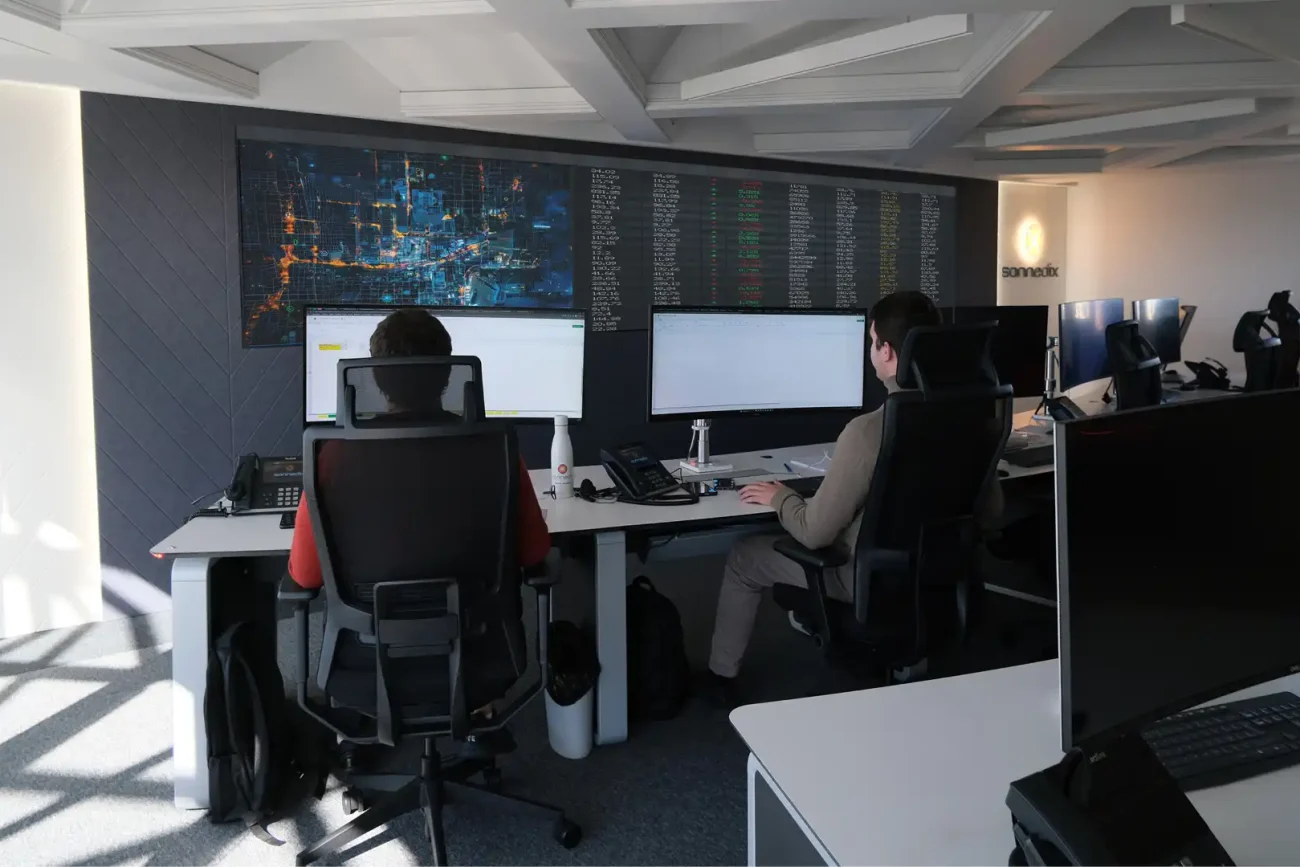
In point 5 of the standard, the factors to be considered in the design of the workplace are developed. It is established that it must be designed to accommodate 90% of its potential users, considering their anthropometric characteristics and defining dimensions that must be considered (Eye Height, Work Surface Height, Viewing Distance…). In certain cases, it may even be necessary to consider additional factors such as clothing.
For example, to determine what would be the correct height of the work surface of a position that a riot police officer will use while wearing a large part of his horse, we must take into account the anthropometric characteristics of the population that can become riot police.
If we take data from the general population and the role requires a minimum height, it may be necessary to filter the general population data based on that minimum height. The equipment would act as a corrector: if you have to wear armor that adds 2 cm of thickness to your forearms it may be necessary to reduce the height of the work surface by 2 cm, or if you have a holster that takes up 10 cm it may be necessary to increase the sitting space by 10 cm.
It is also necessary to consider the factors derived from the tasks that the user performs in the position. In the case of needs derived from visual tasks, the standard gives more precise indications through several examples, but they are limited by the considerations of said examples.
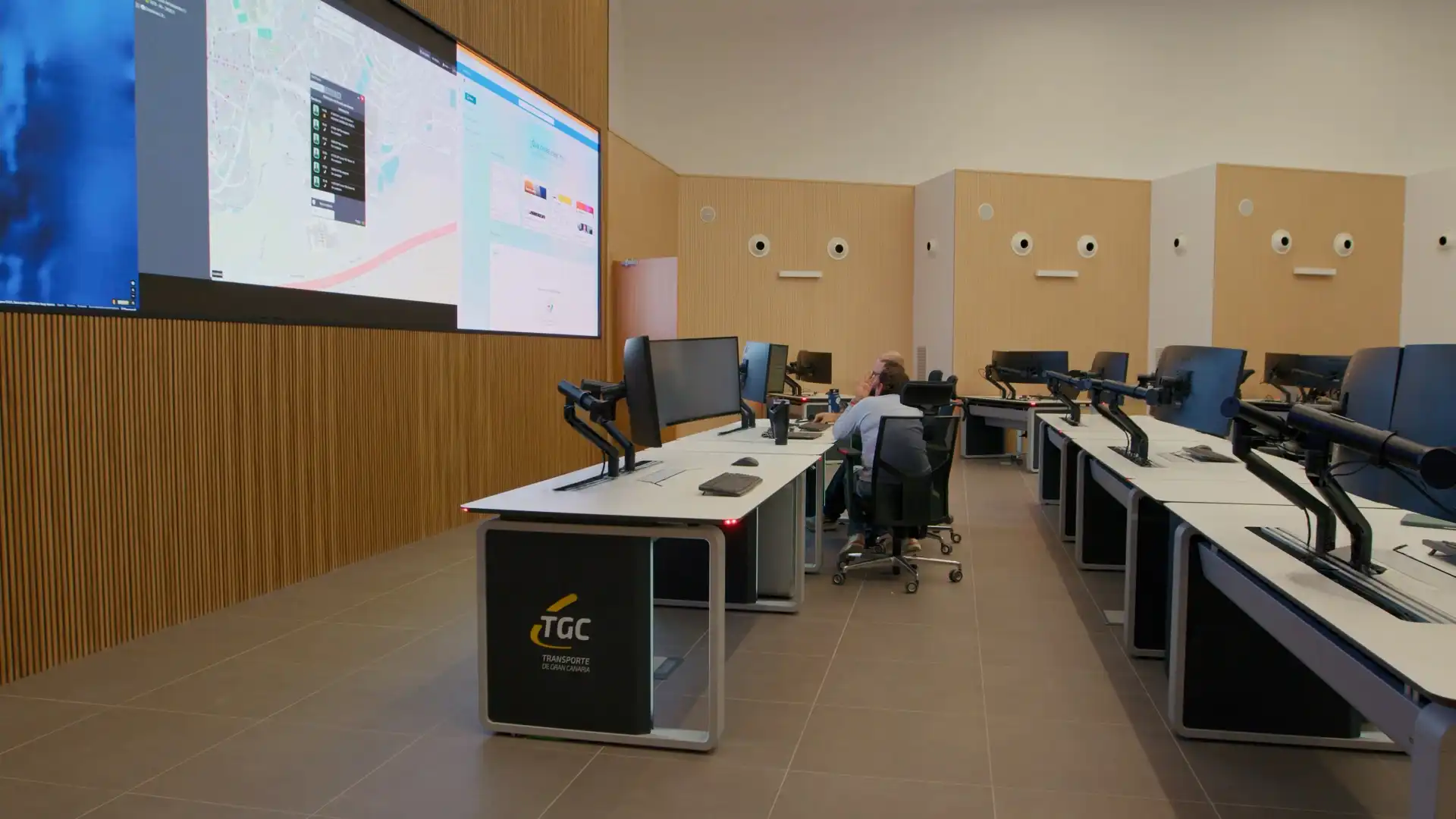
In relation to the needs derived from listening tasks, the standard does not go into more detail than asking that these tasks be taken into account and making some recommendations; but without defining them too much.
The posture is also mentioned, which will depend largely on the tasks to be performed and how the user of the position will need to interact with the equipment.
Regarding the arrangement of monitors and controls, the standard also indicates what is necessary to consider, but limiting the specific indications. Adding several dimensions to take into account (Minimum Dimension of the position, Maximum Scope…).

In the case of the controls we find more definition in terms of keyboard and mouse with the indication of 150 mm to support the forearms between the keyboard and the edge of the console and 200×140 mm to move the mouse. It also recommends that frequently used controls be comfortably reachable from a normal posture. But again we find the absence of many more specific parameters.
Finally, in point 7 the standard focuses on the dimensions of the job, again giving indications and without specifying values.
UNE EN 527-1, support to complete the information
In general, the standard does not establish specific parameters, but rather indicates the need to consider them and in some cases offers methodologies to determine them.
As we have seen in all points of the standard, the specific values will depend both on the anthropometric characteristics of the possible users and on the functions that said users will perform. The dimensions of a checkpoint occupied by a police officer could be different from those occupied by a factory operator, because these groups may have different heights, BMIs, protective equipment, controls, equipment or tasks.

At this point we can conclude that the ISO 11064-4 standard tells us what to consider, but it does not give us any solution, so we must look for what to rely on to determine the solution. And this is where UNE EN 527-1 comes into play.
What does UNE EN 527-1 tell us? Firstly, it aims to specify the dimensions that a workplace in which office tasks are carried out must have, taking as a reference the population of European office users and considering the population between the 5th and 95th percentiles.
If the ISO 11064-4 standard indicated that the different parameters had to be adjusted to the characteristics of the population between the 5th and 95th percentiles and the tasks to be performed while leaving it open to determine that sample, the UNE EN 527-1 standard starts from the definition of a group – European office users – and continues with the definition of the tasks – office tasks.
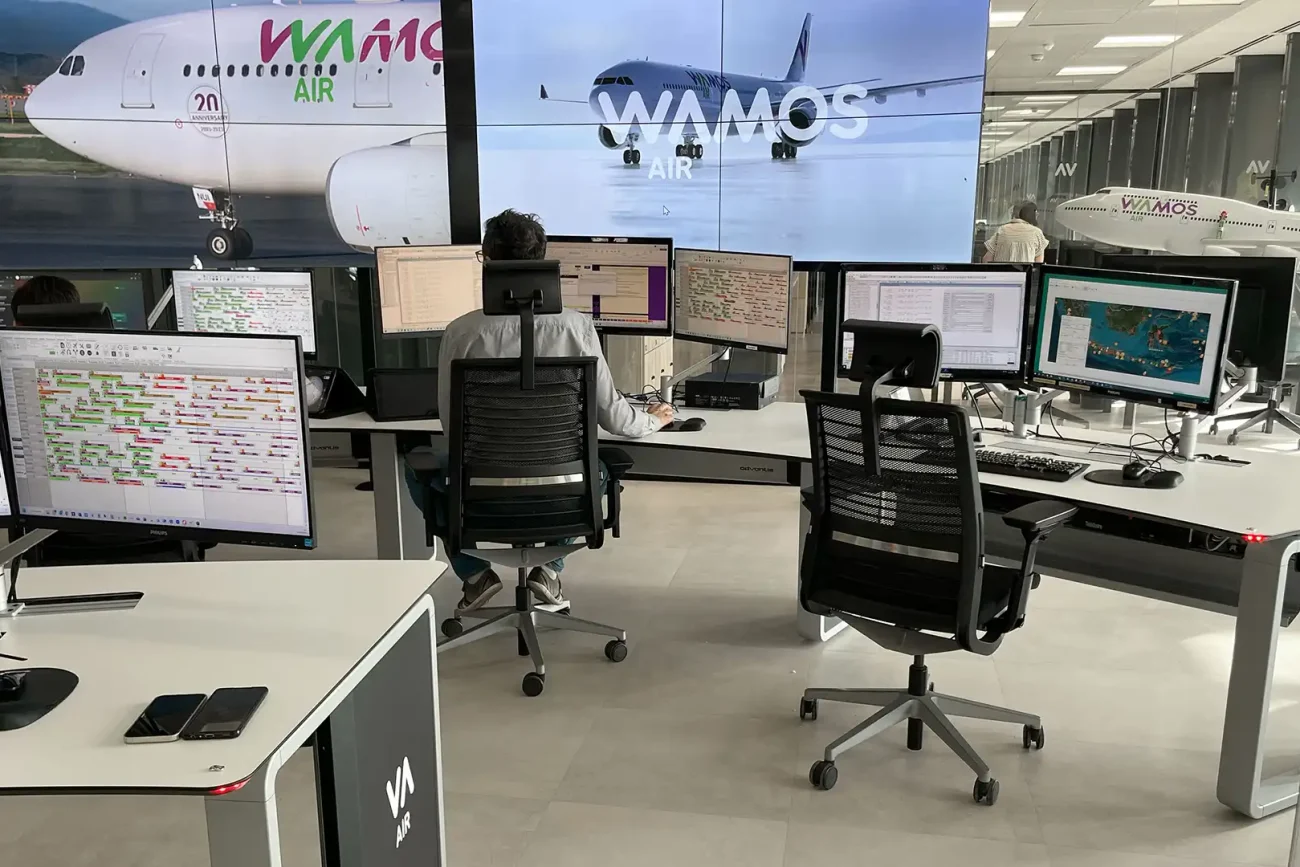
Next, provide a table with specific values for different dimensions of the job; values that have been calculated based on defined criteria. For example, knee clearance at 700mm, minimum foot depth at 150mm, minimum work surface depth at 800mm, etc. Although in no case does it define the position in which the controls or screens should be placed.
In summary, the UNE EN 527-1 standard defines what dimensions a workplace should have, without giving everything we need.
Is this enough? Since we have the result, can we ignore the procedure of the ISO 11064-4 standard, at least where UNE EN 527-1 gives us the answer? The answer is NO, because UNE EN 527-1 provides an incomplete and limited solution in terms of its application. Therefore, we cannot ignore the methodology of ISO 11064-4 because in many cases we will find that we must review values given to us by UNE EN 527-1.
If the tasks to be performed by the user deviate from the premises established by UNE EN 527-1, then we must take ISO 11064-4 as a reference to determine if it is necessary to correct the values it gives us.
In conclusion, we could say that the ISO 11064 standard is the guide that is complemented by standards such as UNE EN 527 that can help with some of its sections, but always having the ISO as the main reference.