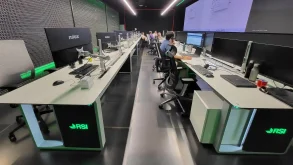
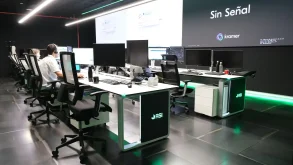
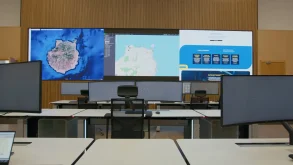
All control centers, regardless of the sector to which they belong, have three common characteristics:
- Efficiency: As these are critical environments where orders are executed, security is controlled or systems are managed, it is imperative that the operators who perform the aforementioned tasks carry them out in the most efficient way possible. On many occasions or scenarios every second counts, so they cannot allow periods of time in which their response is affected by inefficient systems.
- Productivity: these work spaces require maximum concentration from operators, since a mistake or attention to another focus can result in chaos. Regardless of whether it is, for example, monitoring a production line or road control, management systems must be able to notify the operator’s work quickly enough.
- Security: information management platforms must be secure, avoiding damage caused by any of the thousands of cyber attacks that these critical environments receive every day. The information, sources or applications managed by operators must be 100% protected by innovative and certified tools.
The first two points mentioned above are closely linked to each other, since an efficient system will provide the necessary tools that operators need to achieve maximum productivity in the workspace. Today there are already ecosystems in the market designed to automate, synthesize and simplify orders and actions that require human involvement but could no longer do so. This would facilitate savings not only in time for control center workers, but also in significant cost savings and greater corporate productivity, by allocating human resources to other more creative and effective tasks.

Next, in this article we are going to explain a case on how to encourage creativity and maximize efficiency and productivity with a completely secure system and save operating costs in the long run.
A customs control center requires organization, efficiency and productivity for it to function correctly and nothing escapes from the hands of the operators. It is a highly critical space where sensitive information is managed that can affect the safety and health of the population, in particular. depending on what happens in it.
Therefore, being able to carry out task automation, such as validating access to restricted areas or cabin staff – an increasingly critical need that can simply be replicated in different centers – can allow staff to focus on tasks. most important and creative.

To develop access automation, it will be necessary to include all of the person’s legal documentation (passport or identity document). Thus, it will be previously validated by a system that records and contrasts possible fraud or criminal data in a database, which would enable or deny access to restricted areas or upcoming security controls for the person in question.
Everything that happens at the controls, the information that is released or the person requesting access, can be viewed from the position of an operator who has implemented the DeskWall universal management platform, a state-of-the-art system for source control. or applications, as well as the control center coordinator who, through DataWall, the advanced content manager for video walls, can see this same information.
These systems would be connected to the X-ray machine at customs control and in the event that the alarm goes off due to a prohibited object, incorrect identification or inadequate access, can immediately launch different actions to the checkpoints through APITool, the tool that allows you to automate the interconnection of modules and applications. Such actions could be audible alarms, visual alerts, or locking doors immediately.

Replicating this type of security procedures in other customs control centers can be simple, since once the steps and parameters have been established and the appropriate systems have been implemented, carrying out the same procedures in another place does not represent an excessive complication.
The automation of alerts is a system that not only maximizes the efficiency of the control center by avoiding possible inconveniences caused by human oversight or an unwise decision, but also allows operators to focus their attention on monitoring sources that are not possible to automate.