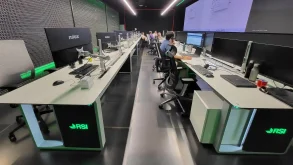
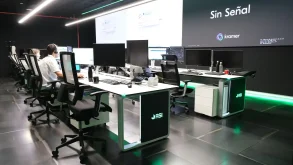
When several operators or supervisors talk to each other inside a control room, oral communication is taking place. It is usually face-to-face communication, without auxiliary means. This type of quick and direct communication allows synchronized and safe actions to be carried out. The room operators can communicate to coordinate their actions in a safe and efficient way, and operators from consecutive shifts can pass on information from one shift to another or give clarifications. A supervisor can lead his team or receive feedback.
This oral communication is based on the transmission of sound waves through the air between a sender and a receiver. The sender of the message generates these waves and the receiver receives them, both interlocutors trying to maintain the integrity of the message. To guarantee the success of these communications, we will apply the principles of communication with a positive approach.

What can happen in a control room that justifies applying a positive communication approach?
- The message may arrive degraded or may not reach from sender to receiver because it has encountered obstacles that block the transmission of the sound wave, such as monitors that absorb it or acoustic panels. The distance travelled can also attenuate the sound wave.
- The message can also become contaminated. The sound wave can mix with other waves in the environment, such as a conversation between nearby operators, the noise of some equipment, or its own echo.
From the design point of view, we must proceed appropriately so that these obstacles are eliminated and communication has a positive approach that maximizes safety and efficiency in the critical environment.
Each environment is unique with unique particularities
It is very important that the communication protocol of the control room considers the particularities of the environment. It could, for example, indicate that several communications cannot take place at the same time to avoid them mixing, or communication could be limited only to adjacent operators. It is also important to limit the noise generated in space so as not to hinder its functioning.
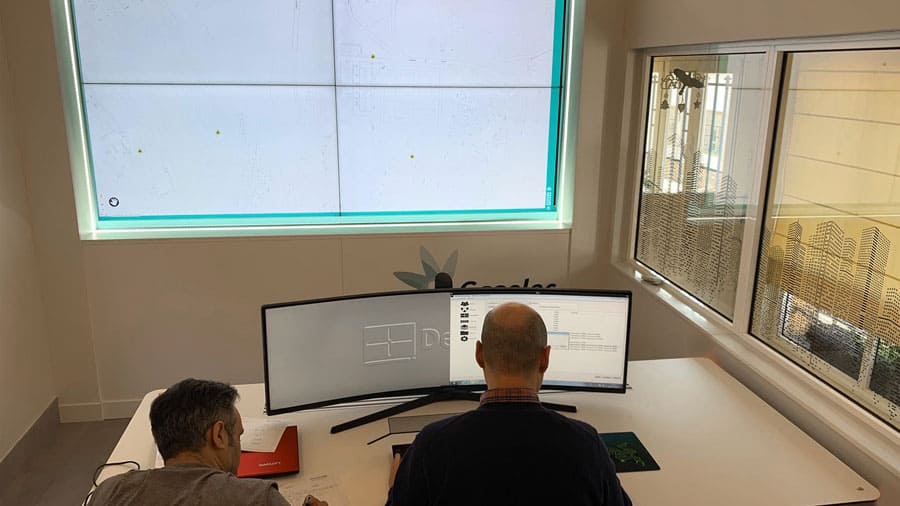
When designing the message, the environment and the conditions in which the communication will take place must be considered, as well as the value of the information to be communicated. In environments where communication can take place without interference and without external noise, the structure of the message might not be defined and the only requirement could be to use predefined vocabulary.
For example, in a control room that has only two operators and the environment is quiet, the operators could talk to each other and would only need to make clear when it is an operational communication, giving the necessary information to understand that communication. On the other hand, in environments where communication has obstacles or there is ambient noise, such as in a factory or a control room with many operators, it may be necessary to have a completely defined and rigid format so that any loss of information in the message is prevented.
It will be necessary to consider the medium, which is the space of the control room that separates the operators. At a concert, we can bring our mouth close to the ear of the person we want to communicate with to make it easier for the message to reach them; and although in a critical environment this is not an acceptable option, it is possible to reduce the distance between the operators who are communicating to make communication easier.
It is also very important to consider the obstacles: every element located between sender and receiver will make communication more difficult. Cabinets, screens, or partitions make it harder for sound waves to transmit properly by reflecting or absorbing them.
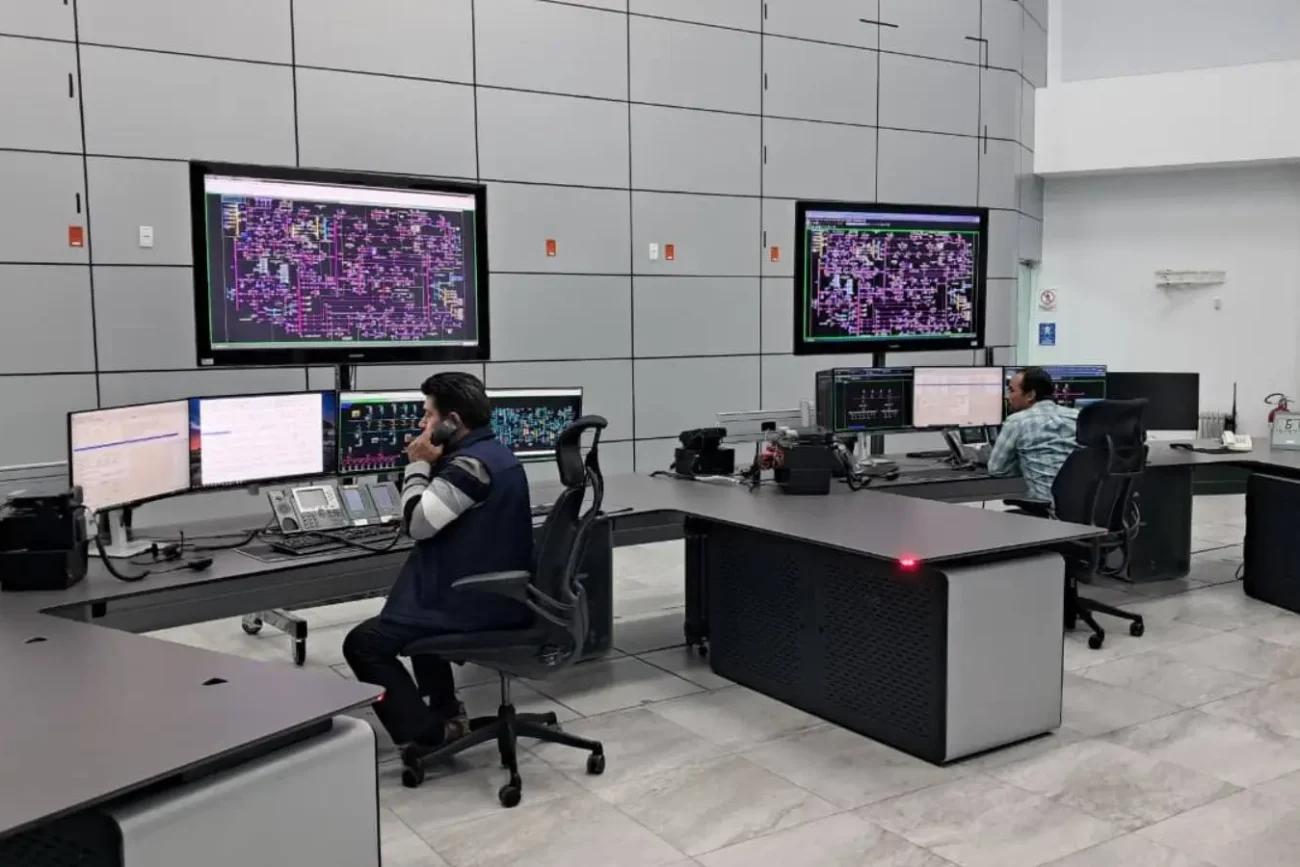
Another relevant aspect that can make it difficult to understand the message is the noise in the room. If four operators are having crossed conversations, there is a high risk that part of the information transmitted in one group will be lost or will blend into the conversation of the other group.
Before applying any design criteria to a critical space, it is vital to identify the communication groups that exist. Identify which workers need to communicate during their work, which operators need to communicate at the beginning or end of their shift… In this way, it will be possible to ensure the correct application of the design criteria so that they are focused on facilitating communication within these groups.
Design criteria to be considered
With all these considerations, it is possible for us to establish design criteria that we must consider in each case to enhance the positive approach to communication:
- We must minimize the noise that enters the room from outside. To do this, first we will try to use a space that is not in contact with an environment where noise is generated. But if this is not possible, we will acoustically isolate the room to prevent the entry of noise.
- We must reduce the general level of noise in the room by using finishing materials that absorb ambient sound and prevent reverberation.
- We must minimize the noise generated inside the room by placing all noise-generating equipment in spaces separate from the room. This can be achieved by promoting KVM technologies such as DeskWall.
- We must consider the processes and communication groups in the organization of the room. Placing operators who need to communicate with each other as close as possible will prevent them from having obstacles between them that cause communication problems. In addition, they will be able to speak at a lower volume, thus generating less noise in the environment, and the ambient noise will affect them less.
- We must create acoustically separated spaces from the control room where communications that do not need to take place at the control station can occur, for example, team meetings or shift change meetings. In this way, we will avoid increasing the noise level in the room with communications that do not need to occur there.
- We must avoid placing barriers between operators who need to communicate. These barriers can be cabinets, screens, partition panels, or even other operators.
- We must place barriers between operators who do not need to communicate when at least one of them generates noise that may affect the other’s communications.
- We must create layouts in which cross-communications do not exist or are minimized, as this avoids both generating noise that affects other communication groups and receiving noise in the communication.
It is important to bear in mind that the solutions or recommendations are intended to create ideal environments that are often unattainable. Although cross conversations are not desirable, it may be that for several groups to be close enough, some must overlap. Although it is desirable to avoid external noise, if the room is in a factory and there are no other available spaces, that noise may be inevitable. Therefore, it is very important to be clear that the goal is not the ideal situation, but the best possible situation.

Oral communication inside the room is not the only type of communication that can occur in a control room. There are other types of communication that can complement oral communication inside the room. Among these types of communication, we have visual communication and remote oral communication, which we will address in future articles.