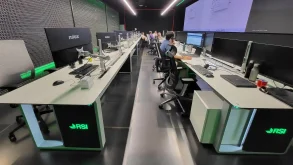
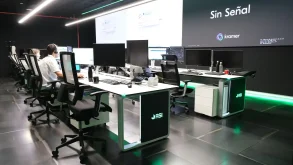
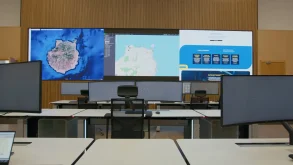
On April 28, 2025, a widespread power outage occurred in Spain, paralyzing critical infrastructure and affecting homes, businesses, hospitals and essential services. Beyond the immediate impact, this event has highlighted the importance of control rooms in crisis situations like the one experienced.
Without attempting to clarify the technical reasons that led to this event, it is interesting to focus on the importance of having safe spaces that continue operating during circumstances like this, as well as their relevance in everyday life to precisely try to prevent these situations from recurring.

When everything stops, there are places where we cannot afford to let our activity be interrupted; spaces designed to withstand the most critical situations and continue operations even when everything around them has stopped: control rooms. Those stable, secure environments are key to resolving these types of situations.
But do we know exactly what a control room is?
Control rooms are operational environments where critical systems designed to operate 24/7 without interruption are monitored, managed, and coordinated.
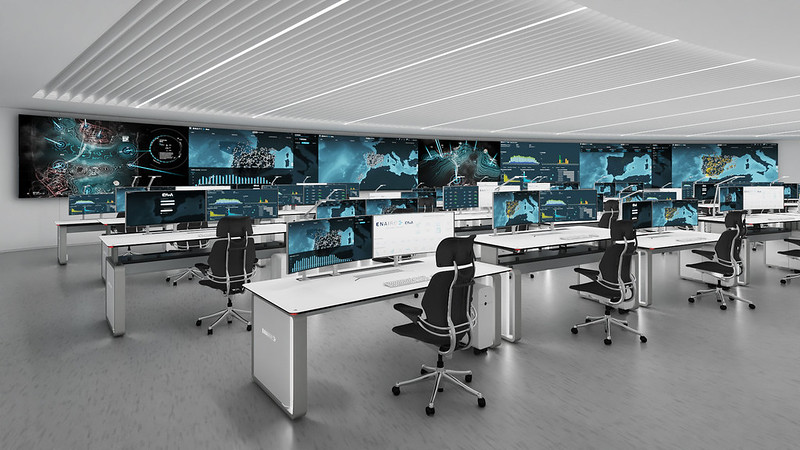
Each operational position is occupied by several operators working in shifts, ensuring this continuity. These professionals not only monitor, but must also analyze, anticipate, communicate and make decisions in real time. Therefore, facilitating their activity so that concentration is maximized is key.
Due to the very design of the room and the work performed within it, it often involves a significant technological and security burden. In fact, these are three of the main points to consider: the human factor, technology and security.
There are a wide variety of control centers. They have no fixed dimensions or specific number of operators; they can range from a small booth with two security guards monitoring a closed-circuit camera (CCTV) to a large room with 100 operators managing power grids, transportation, airports or financial markets.
From one extreme to the other, there are countless options and versions that must be addressed to each situation by adapting solutions, innovating and, most importantly, integrating knowledge in each area involved to achieve the best response to the client’s needs. Always with one goal: the need to operate uninterruptedly.

For all of the above reasons the design and implementation of these types of rooms must be done with care, ensuring they remain operational in the most complex situations, such as the one we’ve experienced. Accommodating operators in normal situations is essential, but facilitating operations in crisis scenarios is probably their main purpose.
Keeping the network and the information managed in these rooms protected from external attacks makes it vitally important to keep the entire system isolated. It’s important to note that not only must the computer systems be kept secure, but physical security through access control is also important. The critical nature of these types of rooms cannot be underestimated, making any security insufficient.
The entire ecosystem integrated within the control room must be equally reliable, ensuring that the entire system maintains its operation regardless of the situation. That’s why there’s a key word: redundancy.
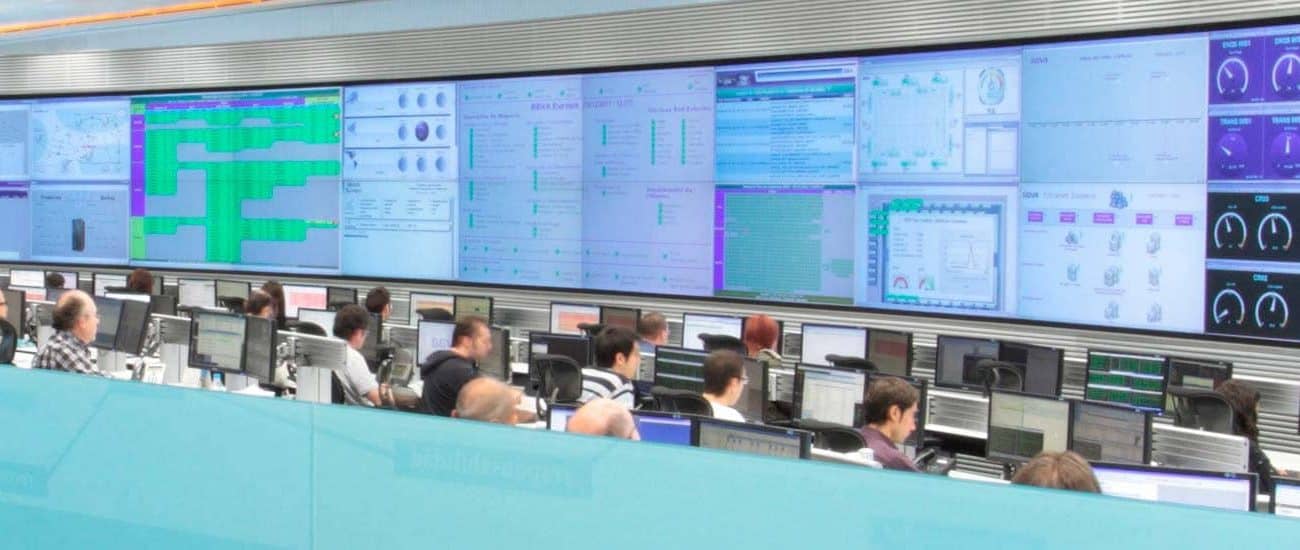
Every critical element, whose failure could compromise operational sustainability, must have a backup. The systems that keep the room running must always be operational, and this isn’t a random decision: it’s about ensuring that operations aren’t interrupted when they’re most needed.
A shutdown is not contemplated. These rooms must ALWAYS be OPERABLE.
Spaces that revolve around the control core
The crisis room
Physically and visually associated with the control centers is usually a crisis room. This room is located in a prominent location within the control room, from which it must be possible to monitor the activity taking place.
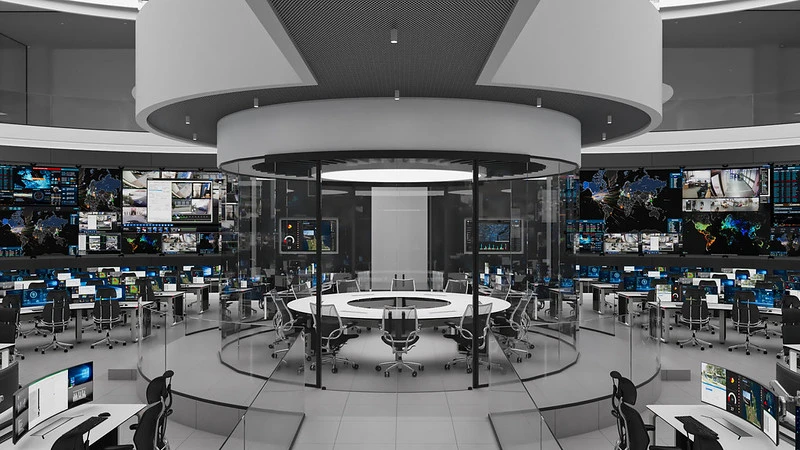
As their name suggests, these rooms are used by decision-makers to meet and make decisions at critical moments. Therefore, they typically feature extensive connectivity: retractable monitors to display necessary information and even one (or several) large-format monitors with a system that allows for video conferencing. All of this is integrated into a multimedia meeting table that must be fully connected to the information needed to monitor the situation.
In crisis situations, they serve as the nerve center of strategy. The place where actions are coordinated and decisions are communicated.
The data center
Located next to the control rooms, data centers support operations. These are equally secure locations where servers, storage systems, networks and even UPS battery systems and generators that ensure uninterrupted power are connected.
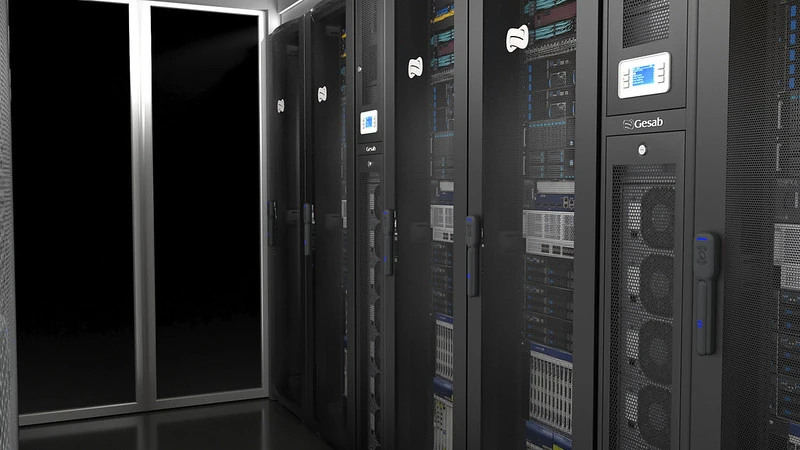
These rooms must be closely connected to the control center, due to the operations of both are complementary and the proper functioning of the data center is crucial to the ecosystem. Furthermore, they require a lot of energy to operate properly, as they contain a significant amount of server equipment that dissipates a large amount of heat. For this reason, their technical load is very significant, making proper ventilation and cooling necessary.
These environments require a significant amount of technical knowledge to design and implement, as the operation of the control room depends on them.
Design and implementation of control rooms
After all the information, it becomes clear that control rooms must not only be functional. They must also be ergonomic, easy to use and representative. With this in mind, special attention must be paid to the following aspects:
- Visual and acoustic ergonomics.
- Technical furniture that enhances operational capacity.
- Adjustable lighting that helps maintain operators’ circadian rhythms.
- Always with a design focused on the operator experience, who are at the heart of the operation.
The lesson the blackout taught us
Returning to the events of April 28th, and due to all the above, it can be assumed that the control room responsible for managing the country’s electricity supply continued to operate normally. With this in mind, I would like to raise a few questions: What would have happened if the central control room from which the electricity supply was controlled had been inoperative? How long would it have taken for the power supply to be restored? How would it have been possible to manage and coordinate the recovery of the situation?
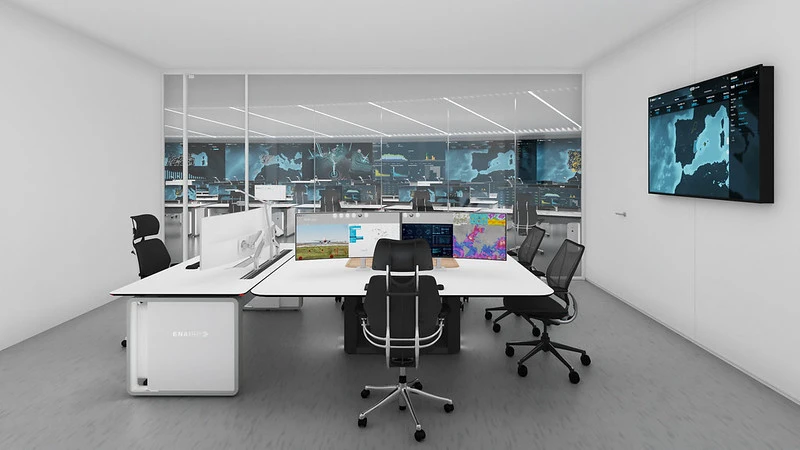
What is certain is that these centers are designed with a vision of stability over time and to withstand unlikely, but not impossible, situations.
We know that control rooms are often unfamiliar spaces. However, their importance, both in everyday life and in exceptional circumstances, is unquestionable. They represent spaces that contain a significant technological load and require continuous work. In an increasingly connected world, situations like the widespread power outage highlight how these spaces must be designed for stability and reliability.