- Base: Base to Operator 3, Close circuit 6
- Operator 3: Operator 3 to Base, I need to close circuit 10
- Base: Base to Operator 3, Negative, Close circuit 6
- Operator 3: Operator 3 to Base, I need to close circuit 6
- Base: Base to Operator 3, Correct
- Operator 3: Operator 3 to Base, Circuit 6 closed
- Base: Base to Operator 3, Circuit 6 closed.
- Operator 3: Operator 3 to Base, Correct
What is “positive communication”?
Control rooms are environments that manage critical processes, ranging from human safety to the operation of industrial processes.

In these situations, operators make decisions based on the information they receive, and a misinterpretation, a confusing order or an omission can easily lead to both personal and financial losses. Therefore, to ensure that information is transmitted correctly, they use what we call positive communication, an approach that seeks to structure information in a way that ensures its proper transmission.
Positive communication is an expression of Anglo-Saxon origin, and depending on the context, it can be translated in different ways, such as “Effective Communication,” when the focus is on successful communication; “Secure Communication,” focused on avoiding errors; “Structured Communication,” focused on standardizing the format; or “Positive Communication,” when the spirit of the English expression is maintained, which has a more comprehensive definition encompassing all of these specific approaches.

Key principles of positive communication
We can say that positive communication is built on several principles:
- Established protocol that defines the parameters of communication.
- Clear, direct, and verifiable message.
- Sender and receiver confident that the message has been transmitted and understood correctly.
The first step to achieving positive communication is defining a communication protocol, which will have specific needs in each case, making it unique and different. But one thing common to all cases is that there is no room for improvisation; all communication parameters must be defined: communication medium, message content, sender and receiver, confirmation method, etc.
In the case of the message, the information transmitted can vary completely depending on the case. In some cases, it may be necessary to identify the sender and receiver; in others, to identify a device; others may have a language limited to yes and no; the key in all cases is that the message must be easy to understand and easy to verify that it has been received correctly.

Transmitting the message to the receiver is not enough; it is necessary to ensure that it has been received correctly and understood. Specific techniques exist for this purpose, such as “Readback,” “Message Repetition,” or “Explicit Confirmation.” In all cases, the responsibility for confirming the correct transmission of the message falls both on the sender, who must actively verify that the receiver has received and understood the message, and on the receiver, who must demonstrate receipt and understanding of the message.
Regulations
It is difficult to find international standards or norms that define the concept of positive communication, or that develop or specify how it should be. However, many regulations mention communication concepts or needs that are part of the framework of positive communication, such as “Effective Communication” or “Structured Communication.”
The ISO 9001:2015 standard is the benchmark for quality management and is globally applicable to all sectors and organizations. Analyzing the standard, we see references to a positive communication approach, starting with the principles that speak of evidence-based decisions. For example, point 5 states that the quality policy must be communicated and understood; point 7 develops the need to establish communication protocols; and point 8 addresses communication with the client and explores the topic of verification and the importance of taking action to avoid human error.

ISO 45001:2018 is the benchmark standard for occupational health and safety management, and like the previous standard, it is widely used globally. Its introduction establishes the goal of helping organizations create safe and healthy environments, eliminating hazards and minimizing risks. Communication is one of the factors for success.
Section 5.4 addresses worker consultation and participation in the OSH management system, establishing requirements specific to a positive communication approach. Section 5.4 b) addresses access to clear, understandable, and relevant information, or, in other words, structured communication. Sections 5.4 e) 2) and 3) assess risks and propose corrective actions in the organization’s own activities. These are where the risks of communication errors should be assessed and a positive approach to the organization’s communications proposed whenever appropriate. Section 5.4 e) 5) defines the need for structured communication.
Section 7.4, dedicated to communication, is essentially a copy of the factors that define a positive communication approach. Section 7.5 addresses documented information, also using a positive communication approach. Section 7.5.3, in particular, defines the need for structured and verifiable communication. Finally, points 8.1.1 a) and 8.1.2 b) allow the OSH management system to establish requirements for the organization’s processes, such as the use of a positive communication approach.
However, there are many sectors where a positive communication approach is essential, such as the air traffic sector, which has the ICAO Doc 4444 standard that defines specific communication protocols; in the petrochemical sector, the API RP 1168 standard establishes communication protocols in control rooms; and the STANAG 5066 / ACP 127 / ACP 125 standards developed by NATO establish tactical and strategic communication procedures. As a final example, the ISO 20022 standard creates a standard for payment and transfer messages in the banking sector.
Effective communication and risk management
The risk arising from a communication error is much higher in a control room than in an everyday environment, or even in most work environments, for one simple reason: the impact or consequences are much greater. For example, a factory emergency shutdown can result in millions in losses, or an airplane accident can result in the loss of dozens of lives.
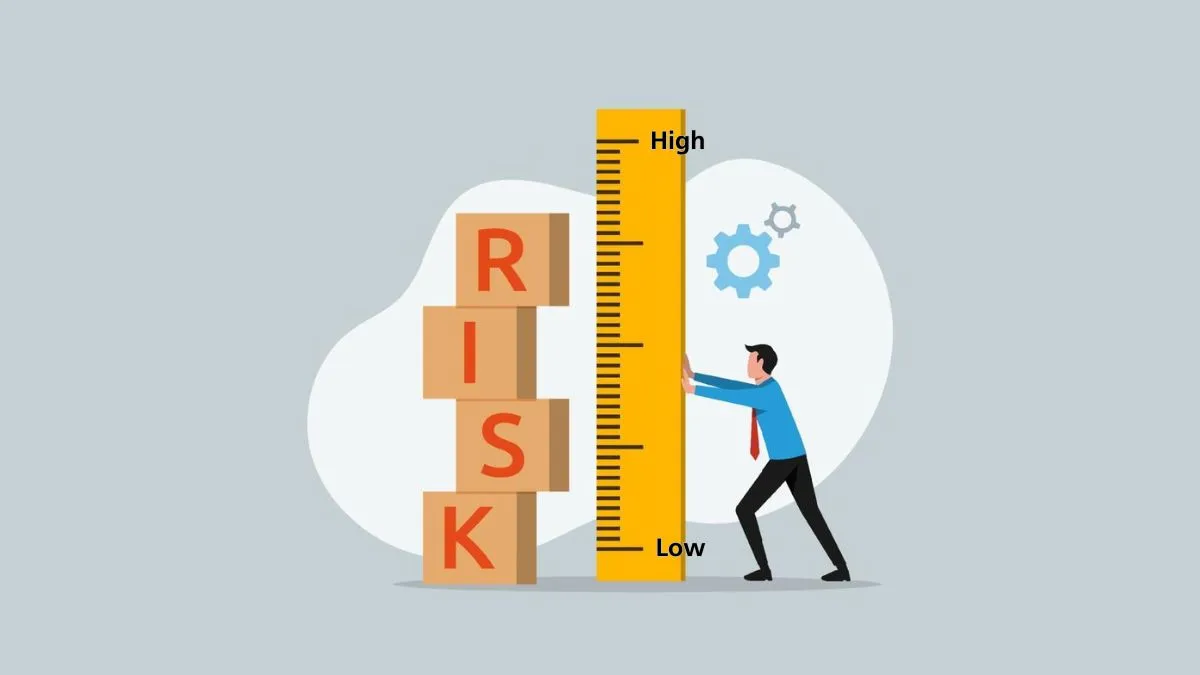
The risk is assessed based on the following formula:
Risk = Probability x Impact
Positive communication aims to reduce this probability by eliminating errors. If we manage to reduce it, then the risk also decreases, despite the impact. If a factory doesn’t fail, there are no losses; if a plane doesn’t crash, there are no casualties. Many factors influence probability, and communication errors are a very important factor we can address to minimize errors.
How do we apply the positive communication approach to control room design?
We’ve already explained what positive communication is and justified why it’s so important. Now it’s time to ask new questions. How can we apply a positive communication approach in a control room? To what aspects of control room design can this approach be applied? And what aspects should we focus on from a room design perspective to minimize the likelihood of a risk while maximizing the likelihood of an opportunity?
To answer these questions, it’s necessary to conduct a more specific analysis of the needs generated by each type of communication we encounter in a control room, which will allow us to propose specific design strategies for each type.
To be continued…