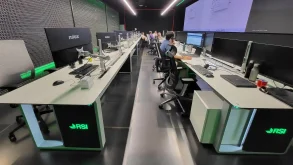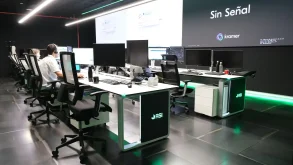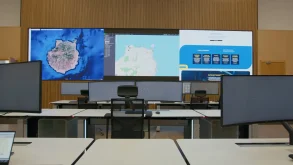
Control center efficiency is a pillar key to consider when establishing its operations. Those who work in these types of critical environments should not spend their time on tasks that could distract them from monitoring and managing key sources, applications and alerts.

Despite technological advances, artificial intelligence and new advanced management platforms, many control centers still rely on manual operator input to attend critical events. These manual processes generate delays, human errors and increased workloads that could be avoided through automation.
Automation minimizes error
Conectar situaciones externas con reacciones inmediatas permitirá minimizar los posibles problemas conllevados de un error humano y herramientas como APITool pueden ayudar a esta interconexión.
Connecting external situations with immediate reactions will minimize potential problems caused by human error, and tools like APITool can help with this interconnection.

People often resist to change the way they work in any work environment, but in critical spaces like a control center, this stubbornness becomes even more evident due to fears of losses during the process. It’s true that implementing any change or new system must be done carefully and thoughtfully, but it doesn’t have to mean halting activity or leaving positions unattended.
Contrary to the mantra “if something works, leave it as it is,” opting for change, for example, by implementing a task automation system, will keep the control center working “one step ahead.” From changing the GRID to starting recordings, including alert messages, closing sessions and opening sources or even sessions, everything can be executed without the constant intervention of the room coordinator or operators. Through a simple configuration using the Config APITool, the necessary associations between triggers and actions will be made so that everything works as it should and nothing is left to chance.

It is important to consider that any system that emits a digital signal can be the trigger for an action ordered by APITool, for example:
- A camera that detects movement
- An alert from the access control system
- A technical failure in an infrastructure
- An emergency button pressed by a person
The tool detects the received signal, interprets the event, searches its database for the previously parameterized automation for that event and executes the command or action. This process eliminates the need for operator intervention to maintain control over secondary events where human presence may not be as critical and can be relegated to more serious events.
Why invest in automation?
Automation is essential in any control center. Resources are limited and no matter how well-trained staff are to monitor and manage a high volume of incidents, screens, applications or systems, it will increasingly become necessary to relegate alerts that don’t jeopardize the criticality of the environment to the background.
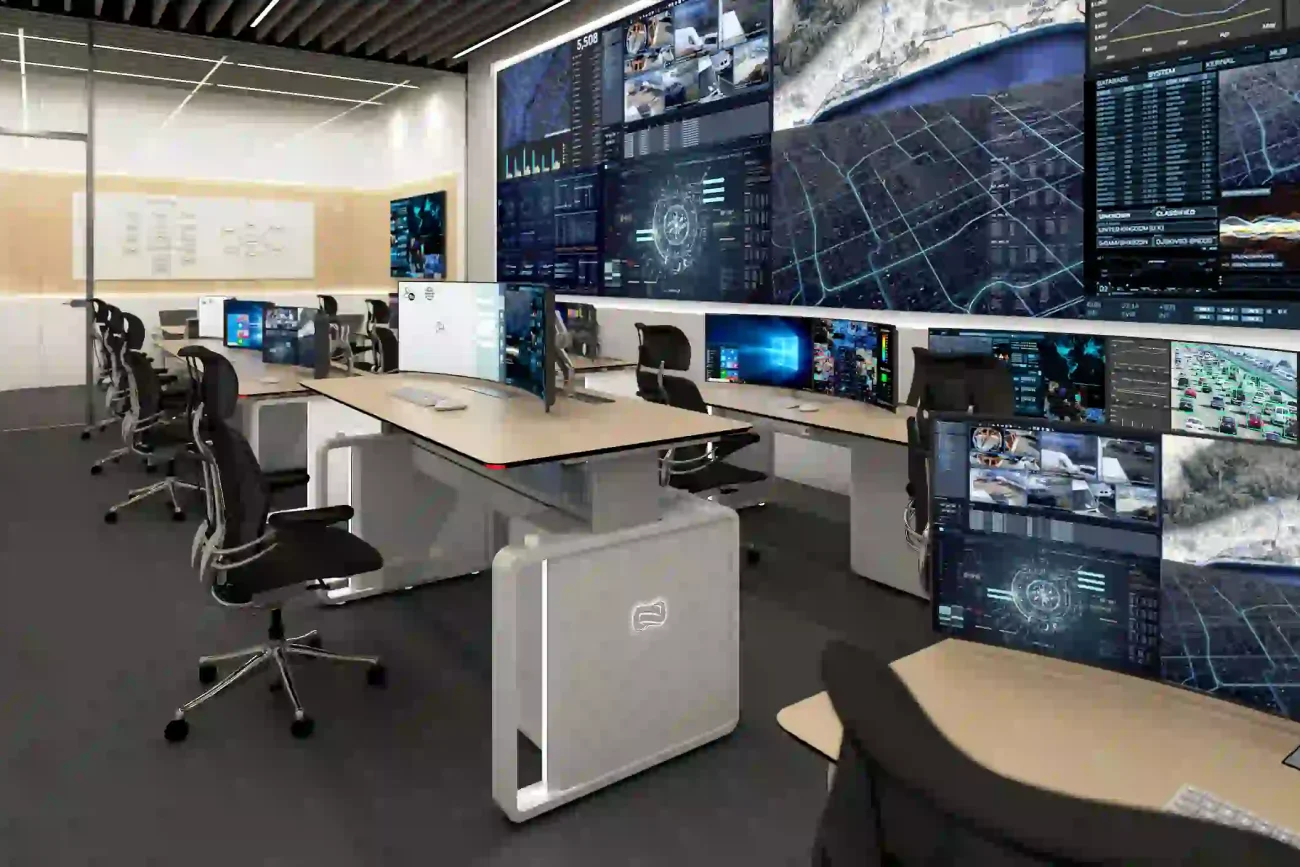
Added to this, it is the statistics: it’s more than proven that people’s ability to concentrate has declined in recent years, due to the hyperconnected, fast-paced environment of rapid, short-term stimuli in which we live.
Although every control center manages sources that require continuous monitoring, it’s true that not all are equally critical. For example, the control room of a prison will need more resources than an access control room for an office building; and in these cases, APITool is more than just an option; it becomes an essential tool.
A specific case
Let’s explain a situation to better understand the reason for this statement:
The opening of a cell door outside prison hours is detected.
>> After setting the parameters in APITool, the tool will automatically open and display the feed associated with the camera pointing at that cell to the on-duty operator and, additionally, send an alert message to the control room coordinator who may be in another location to ensure that this unusual event is controlled by at least one person.

>> Additionally, if the event persists without a response after a pre-configured delay, the camera pointing at the cell door will be triggered to record what’s happening. This second command could also be configured to automatically start recording upon detecting the door being opened.
This type of event-action, which detects intrusion into a restricted area by unauthorized personnel, can be applied to various spaces such as airports, factories with industrial processes separated by areas or public administration buildings where work is carried out both in the public eye and in private offices.

As you can see, automation is a need in control centers, integrating the technology used and reducing the possibility of human error. This combination creates safer, more efficient and more reliable critical environments.
With APITool’s Premium actions, such as setting time delays or controlling surveillance camera recordings, we’re taking a step further by supporting control centers in their evolution toward a more functional and efficient environment.